
Ready or not, the AI Revolution arrives at Branford High School

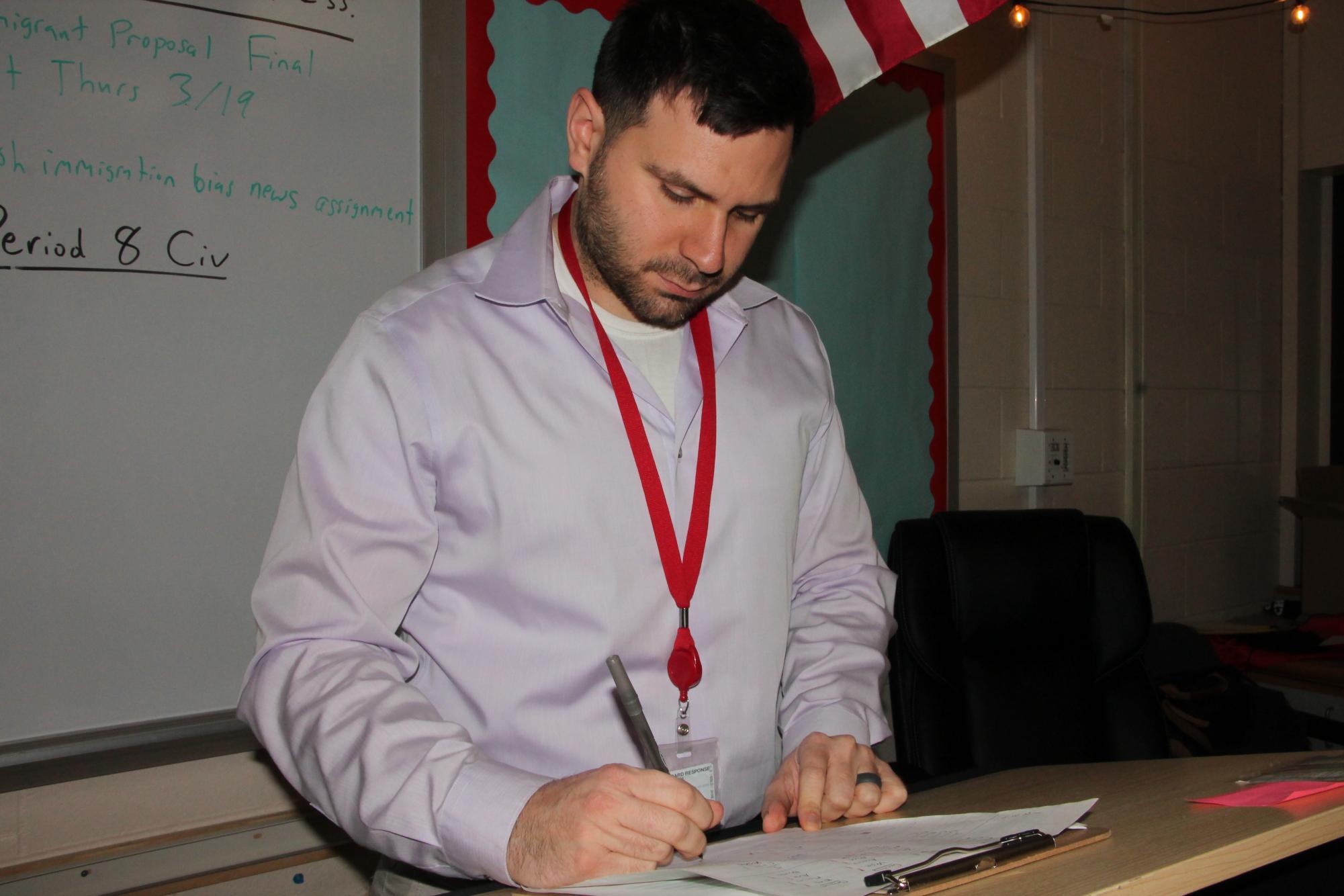
Ninth-grader Christmine Ekebuisi talks to AI, asking questions to help her understand complex topics in school. Sophomore T.E say they asked ChatGPT to help them find sources for a research project. History teacher David Trotta uses AI to create personas of historical figures for students to chat with.
The age of artificial intelligence is upon us.
Since its general release to the public in 2022, this innovative technology has rapidly integrated itself into countless areas of life. BHS is no exception.
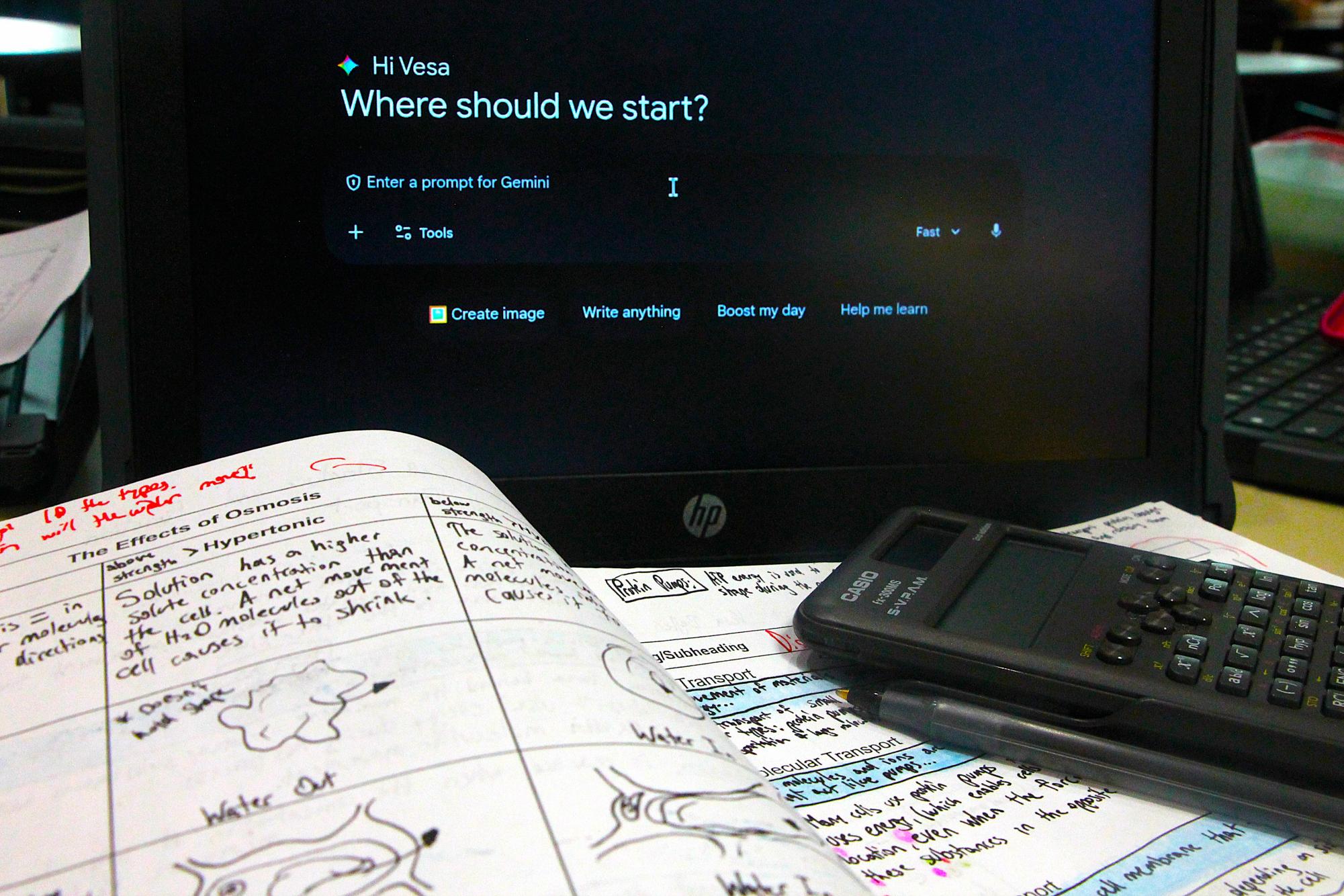
At Branford High School, both teachers and students are turning to generative AI tools – ChatGPT, Gemini, DALL-E3 are some of the more popular ones – for creating content, answering questions, summarizing text and more.
And of course, those same AI tools are being used in some cases by some students to cheat or do their work for them.
Artificial intelligence refers to the application of computer science in programs or software that gives them the ability to perform tasks normally requiring human intelligence in fields such as finance, manufacturing and others. It was first developed in the 1950s and has been evolving ever since. Generative AI, on the other hand, is the tool that is more associated with the day-to-day applications of the technology. This is AI most commonly used by the general public, including teachers and students.
Between January to May of 2025, the percentage of high school students using AI tools for assistance with schoolwork has increased from 79% to 84%. No matter the use or the reason, the impact of AI is disrupting education and teachers and students are struggling to adapt. The change has come upon quickly over the last several years. The Branford Public Schools, like many school districts, does not even have a policy regarding the proper use of AI in schools.
“We have a group of 10 [administrators] this year that are part of a consortium run through ACES,” said Superintendent of Schools Dr. Christopher Tranberg. “That are learning about what are the implications, and how the school should best approach creating a policy.”
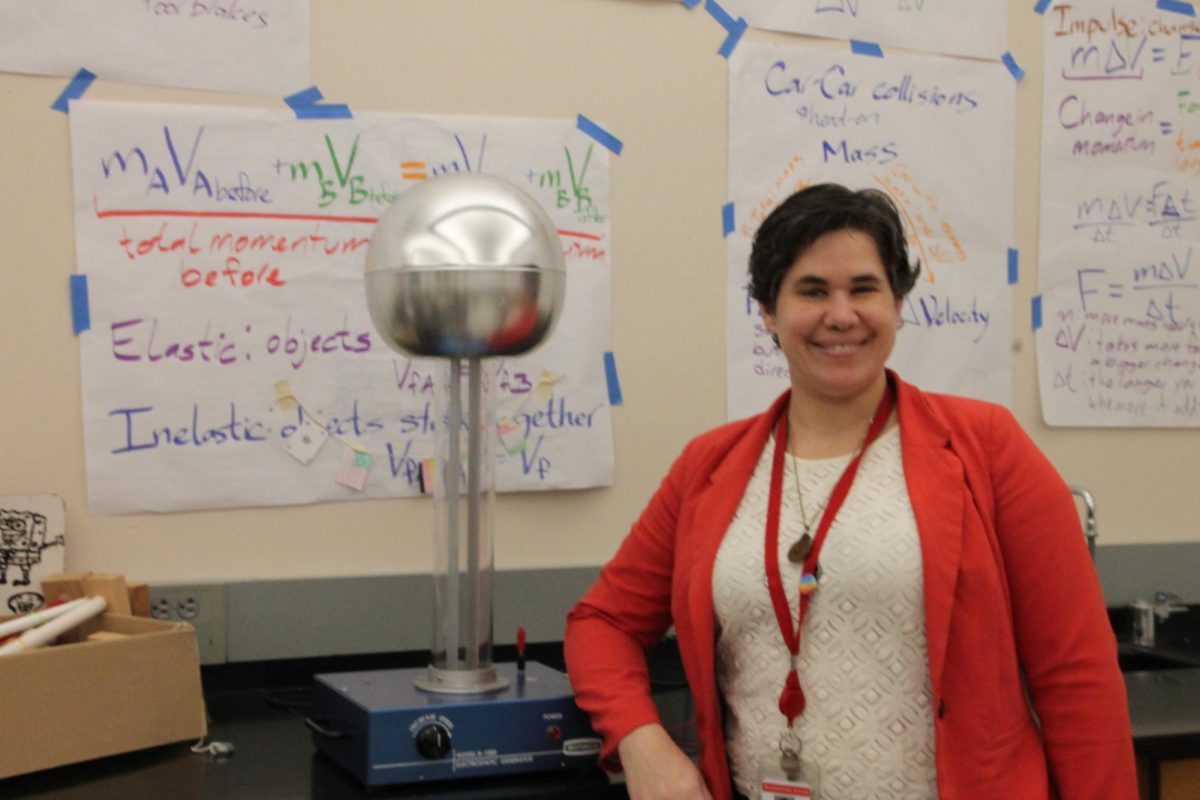
While administrators consider its legal and moral implications, the technology is being used in many classrooms as a learning tool. Current Issues and Modern Civilizations’ teacher David Trotta said he’s been integrating AI tools into his student’s learning.
“I like to use [AI] for the kids to chat with like it is the historical figures we are learning about [in class]. In the future, I’ve been thinking of using it for students to get feedback on their papers as they’re working,” Trotta said. “I think that when used in a positive way, it can be very helpful.”
Many students from Trotta’s class shared their experience with the chats, expressing how useful the tool has been in helping them better understand the thinking of the historical figures they are learning about.
“In my opinion, it was very effective as it helped us to not just see a person lost to time, instead, allowing us to see a human being who changed history in their own ways,” comments sophomore T.E. on her experience. Like several students interviewed for this article, she asked to remain anonymous.
Aside from humanities, AI has been present in science classes too. Jonathan Corbett is an Engineering for Natural Disasters and Physics teacher. He detailed on the AI that he himself programmed, generating practice quizzes for students in order to better prepare for tests.
“[AI can help] students advocate for themselves better, doing stuff we’re already good at, but not helping them make creative decisions,” explains Corbett. He also reported using AI to generate images, maps with text, and graphs to make it easier for students to understand complicated material.
The classroom of another science teacher, Valerie Duffner, has also incorporated AI usage. Duffner said she uses the technology for lesson planning and assessments.
“My students are allowed to use it in class for work, obviously not for assessments,” she commented when asked about her students’ reliability on AI in her Physics’ classes. “My students are allowed to use it because AI isn’t very useful for students to avoid work in my class, because it’s physics. They do use it as a tool for help in problems though.”
In the PE and health department, teacher Anthony Ruglio details how practical generative AI has been for him.
“I have used AI to generate lesson ideas, create real life learning experiences, exit tickets, and help differentiate activities to meet the needs of all students,” said Ruglio. “It’s a great resource to come up with unique lesson ideas to better serve our students.”
Additionally, AI images in teacher slideshows have seemed to be a common observation in classes.
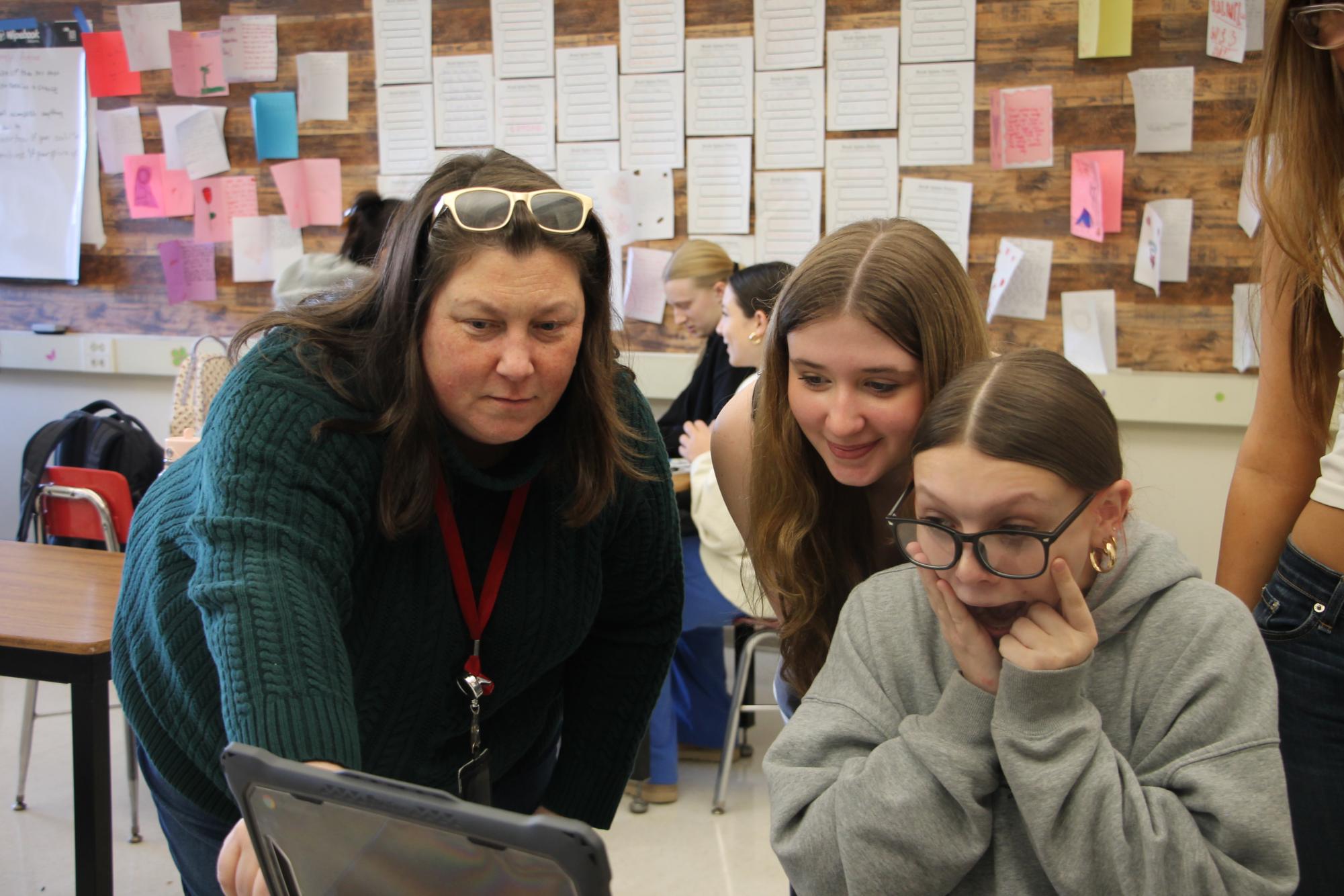
Several BHS teachers said they are concerned about how AI can be used to help students cheat.
“AI is a very useful tool for people who are trying to learn a subject, and for those who are experts to keep researching,” Duffner said. “The issue with AI use with students is that it can be used to skip the struggle necessary to become more intelligent people. Being good at something means practicing… it lacks a certain level of sophistication, which students will never reach if they skip the necessary steps of being bad first.”
English teacher Jennifer Ryan said she’s been assigning more pen-and-paper assignments rather than electronic ones, and having to use Securly (a digital, student-monitoring platform) to check if there is AI being used.
“Because I teach English, I’m more interested in a student’s thoughts and struggles, so I’m concerned about their AI usage,” Ryan said. “I have started to assign more paper and pencil work that focuses on analysis than resorting to work that has right or wrong answers.”
This shift has not been limited to Ryan’s classroom. In fact, the English department as a whole has been concerned about how to adjust to AI being included in students’ work.
“There’s been a lot of thought on how to use it in the English department,” comments Civilizations and Literature teacher Colleen Lepre. “We as teachers are figuring it out, how to help kids use it as a tool to grow, instead of replacing learning.”



Our fundraiser provides readers with the opportunity to boost our enthusiastic student journalism team. Contributions also allow us to cover website hosting costs, fund staff training, and purchase equipment. Thank you for considering a donation!